If you already own the land, the hard part usually isn't the house. It's the lot. We build across the Merrimack Valley, supervised by Matthew Moisan under Massachusetts Construction Supervisor License CS-119855, and the first thing we do is tell you what your parcel will actually support — before you pay anyone to draw a plan for something it won't.
Call or Text (978) 604-0299Everything else is design. These four are constraints, and finding one of them late is what turns a build into a write-off.
Is the lot buildable as it stands? Frontage and lot-area minimums vary sharply town to town. In Billerica, the Very Low Density district alone wants 30,000 square feet and 150 feet of frontage, and the rural district wants 50,000 and 200. An older undersized lot may still be buildable under Massachusetts nonconforming-lot protections, but that is a determination the building commissioner makes, not something to assume.
Sewer or septic. This decides more new builds than zoning does. See below.
Which energy code your town is on. Not a detail — see below.
The certified plot plan. It needs a surveyor, and it is almost always the schedule driver. Start it first.
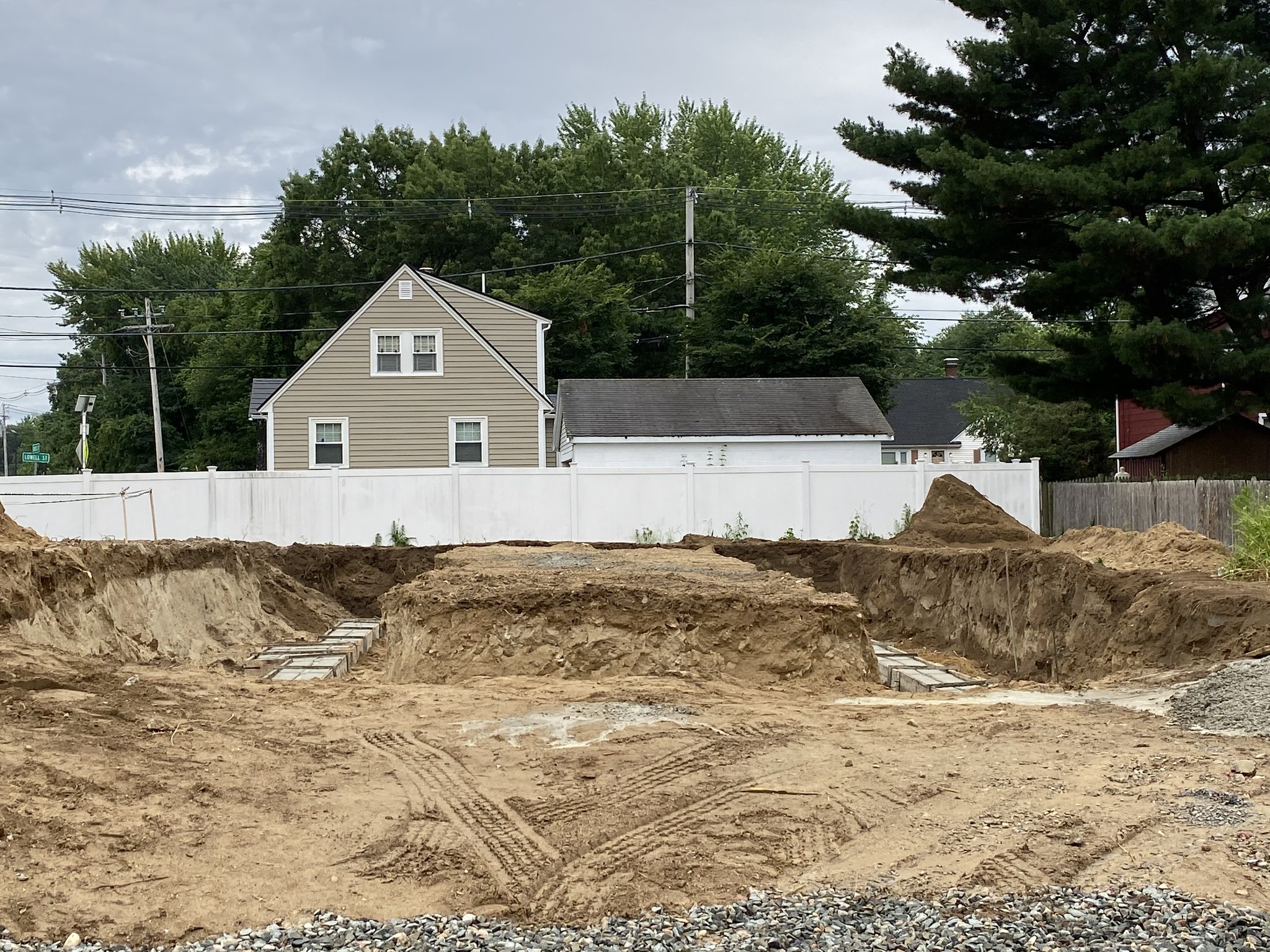
On an unsewered lot, a new house has to carry its own Title 5 design flow — roughly 110 gallons per day per bedroom. That is not a formality. Poor soils, a well or wetland inside the setbacks, or no room for a reserve area can make a parcel unbuildable at any price, and no zoning relief fixes it.
This varies enormously across the towns we serve. Lowell is fully sewered, so it simply doesn't arise. Woburn is sewered citywide. Wilmington is mostly septic, and its Board of Health applies a four-bedroom minimum design flow per unit that is stricter than the state requires. Dracut has municipal sewer but no treatment plant of its own — it discharges through Lowell and Methuen — so coverage is patchy and parcel-specific.
Which is why the first question on any lot is not what you want to build. It's whether the parcel is on sewer, and if not, what the soil will take.
Massachusetts towns sit on one of three energy codes, and a new dwelling feels the difference.
On the Stretch Code — which covers Tewksbury, Billerica, Lowell, Dracut, Woburn, Stoneham and most of the region — a new build needs a HERS rater on the job, one 50-amp EV-ready circuit per dwelling unit within six feet of a parking space, and a solar-ready roof zone of at least 300 square feet where the roof qualifies.
Wilmington is the exception. It is the only town in our service area with no Stretch Code adoption. Base code only: no mandatory HERS rating, no EV-ready circuit, no solar-ready zone. The identical house costs less to certify in Wilmington than in Woburn, and that difference doesn't show up until someone prices the job properly.
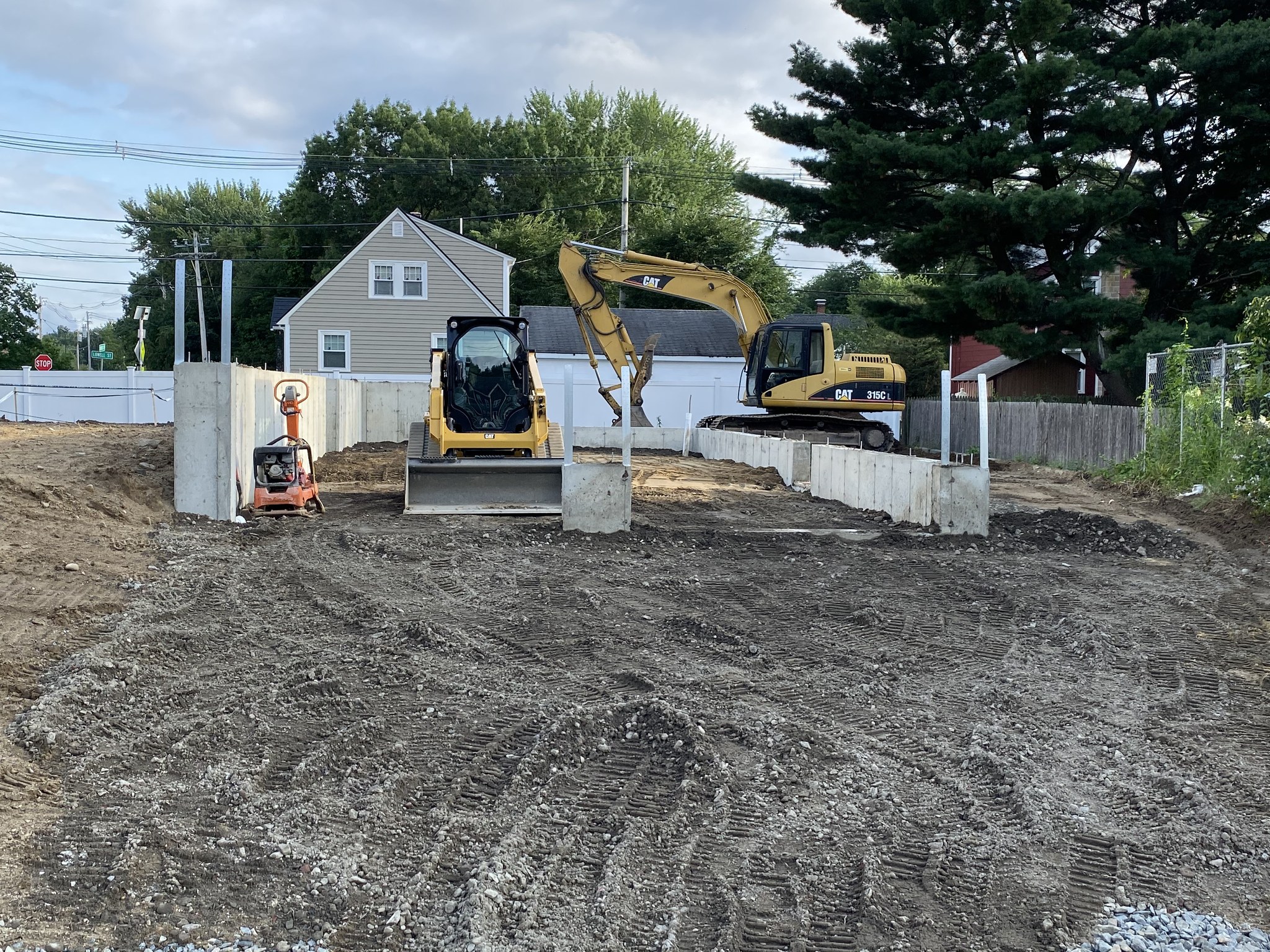
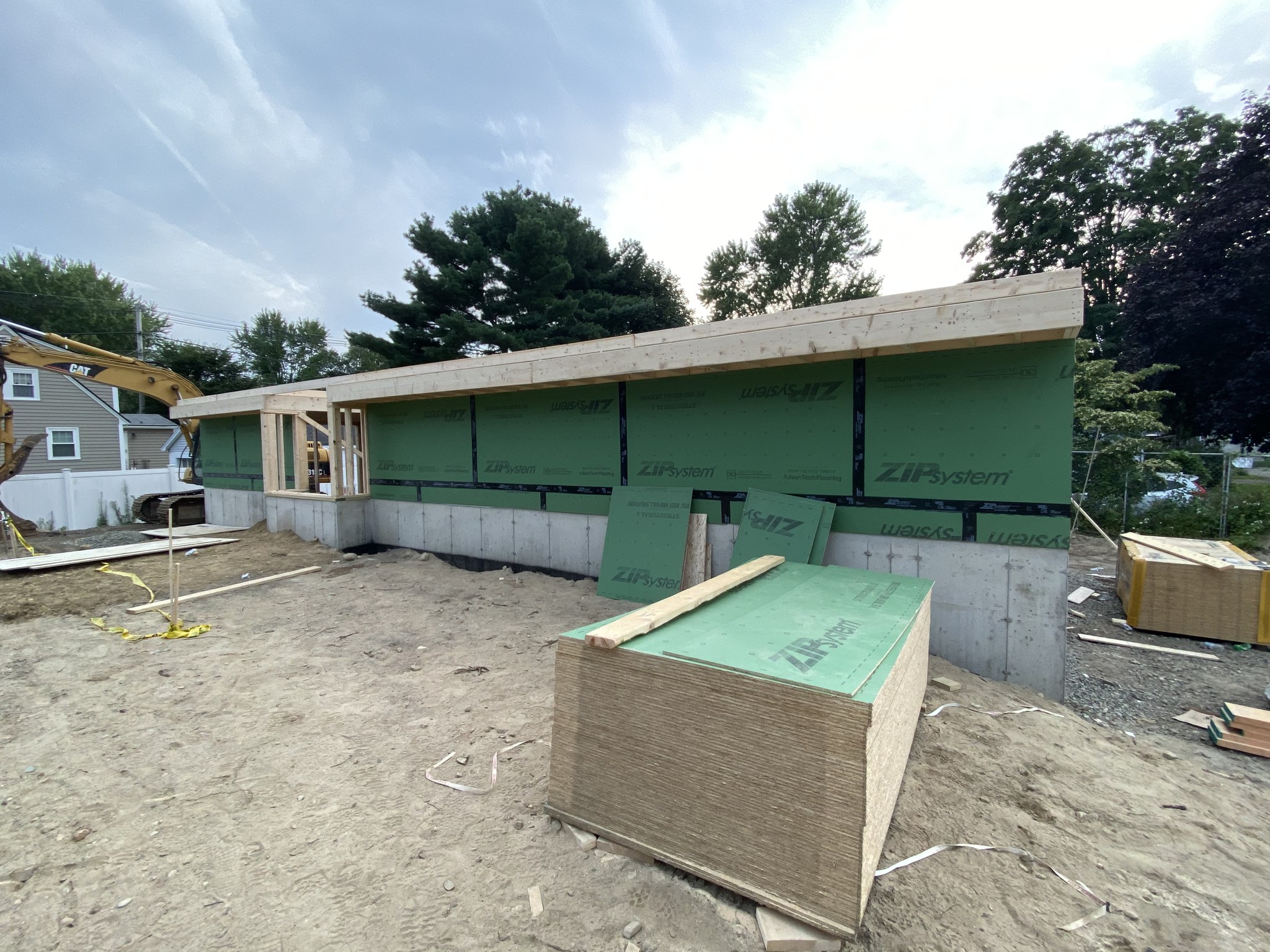
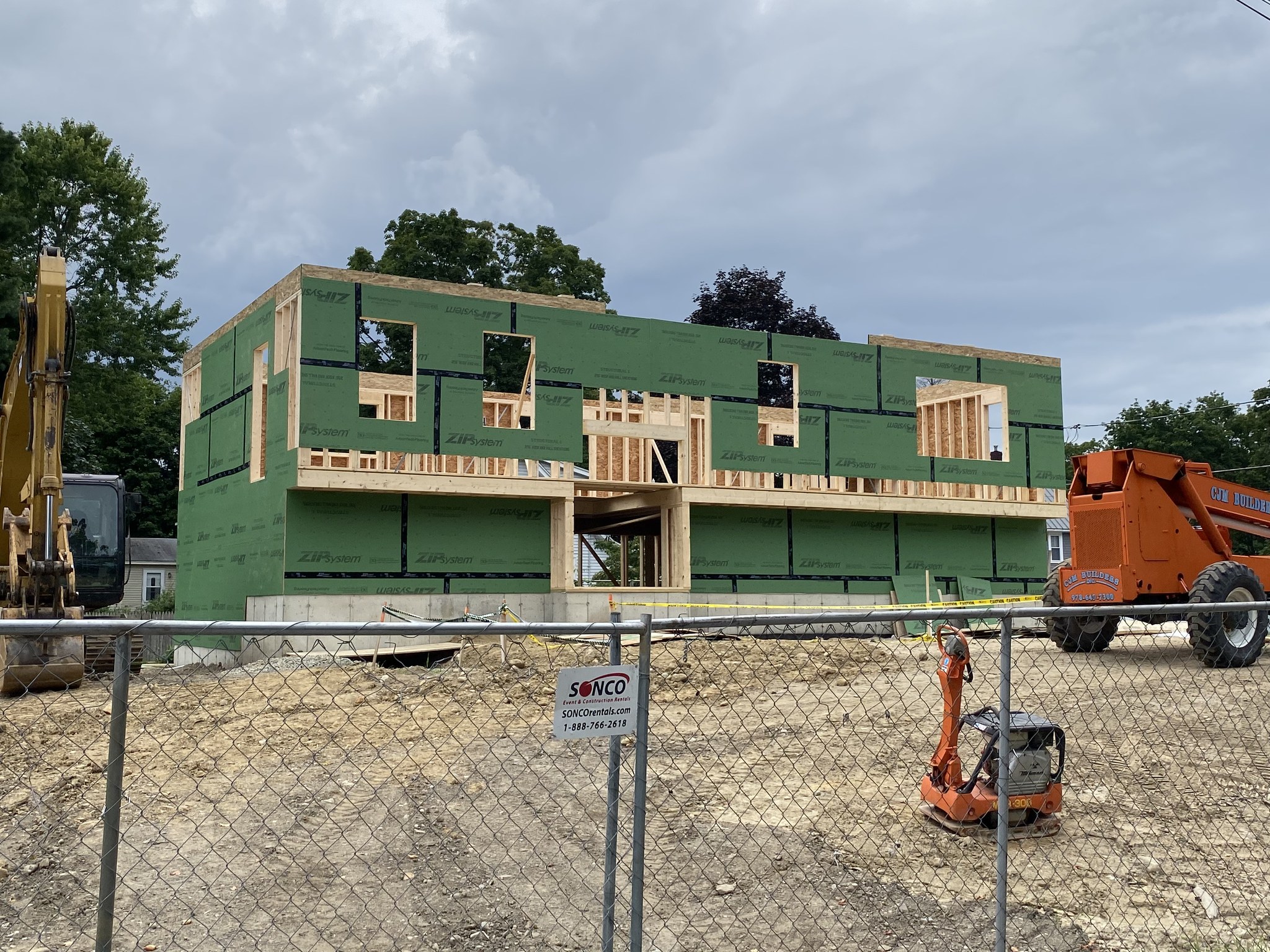
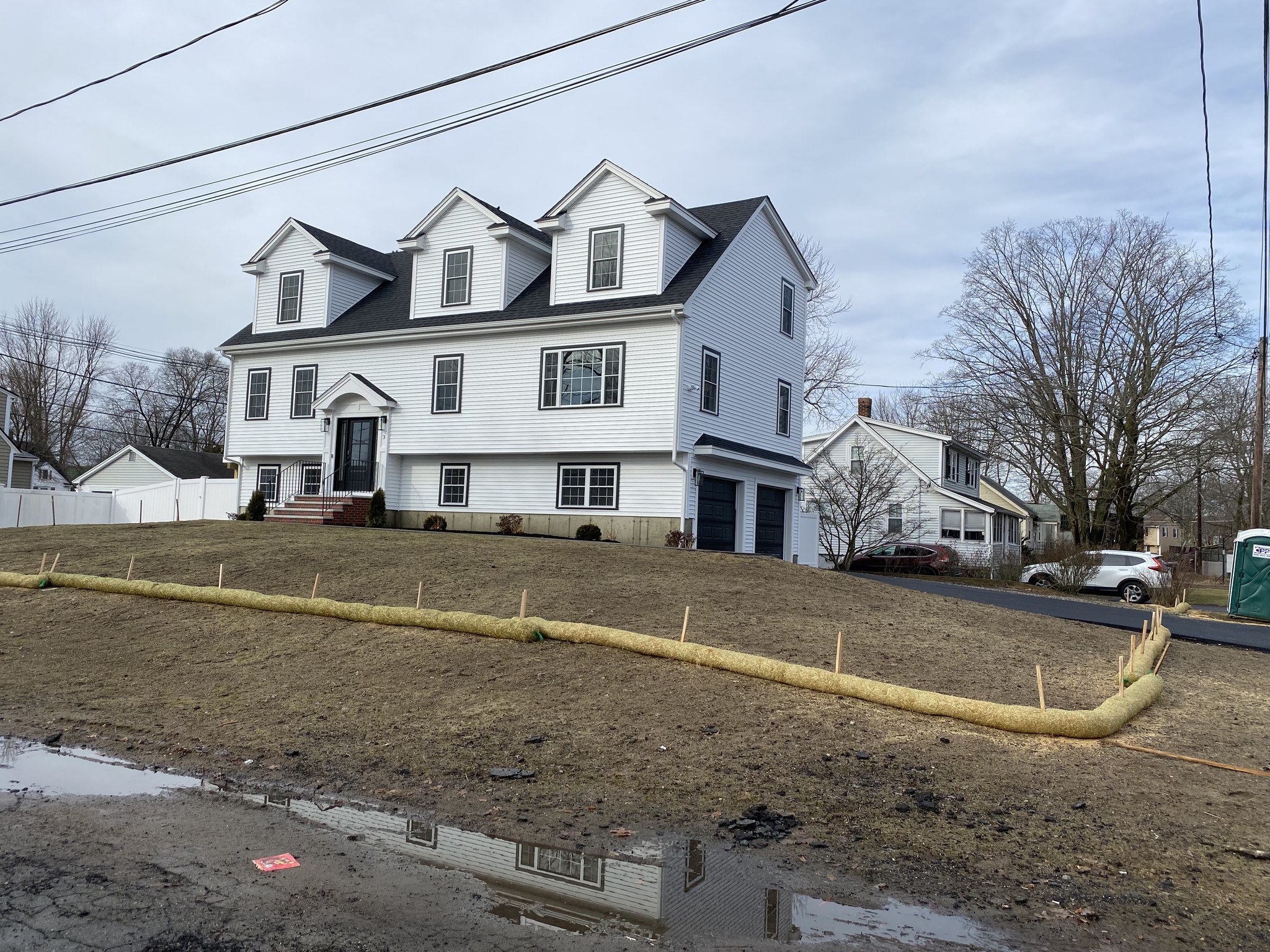
This is a single-family build in Wilmington, start to finish. The sequence matters more than any one photograph — most of what decides a project happens before the frame goes up.

Excavation and foundation. The lot decides this, not the plan.

Site work once the walls are poured.

First-floor deck framed, sheathing starting.

Two stories dried in.

Finished.
New construction is structural work, and in Massachusetts it needs a licensed Construction Supervisor. Matthew Moisan holds CSL CS-119855, unrestricted, and Promise Point Properties is registered as a Home Improvement Contractor under #212044. Both numbers are verifiable on the state register in about thirty seconds, and we'd rather you checked.
We pull the permit in our name. If any contractor asks you to pull your own building permit on a new house, that makes you the construction supervisor of record and forfeits your access to the state Guaranty Fund. It is worth asking why before you agree.
A detached accessory dwelling unit is a ground-up build in every respect — foundation, framing, roof, full mechanical, electrical and plumbing, certificate of occupancy. Massachusetts made them legal by right in February 2025, and it is often the sensible first project on a lot you already own, particularly if the long-term plan is larger.
If that is the direction, the town-by-town ADU rules are worth reading before you commit to anything.
We build within about 25 miles of our Wilmington office — Wilmington, Tewksbury, Billerica, Woburn, Stoneham, Wakefield, Lowell, Dracut, Lawrence, Haverhill and Methuen.
That radius is not a marketing line. A job we can't get to reliably is a job supervised badly, and on new construction that shows up in the finish work. If your lot is outside it, we'll say so rather than take the deposit.
A site visit, not a quote over the phone. We walk the parcel, confirm sewer or septic and check the existing file if there is one, look at frontage and setbacks against the district you're in, and tell you what the lot supports. If the answer is "less than you hoped," you get that on the first visit rather than after the survey bill.
Then a written scope with a real number in it.
Tell us where the lot is and what you're thinking. We'll tell you what it will carry.
Get a site visitCall or Text (978) 604-0299